Cusco
Peru's high Andes former Inca capital at 3400 metres - precise stonework, colonial layers, and the gateway to Machu Picchu and the Sacred Valley.
Before you go
CuscoBest months
Suggested days
Daily budget
Airport
PEN
Language
What is this place?
Cusco sits at 3400 metres in the Peruvian Andes and served as the capital of the Inca empire Tawantinsuyu. Spanish colonial buildings from the 16th century rise directly from Inca stone foundations fitted without mortar that have endured centuries of earthquakes. The historic centre became a UNESCO World Heritage site in 1983. The city was designed in the shape of a puma with Sacsayhuaman forming its head.
The altitude affects most arrivals from sea level. The first day often includes headache, fatigue and nausea. This is physiology and the acclimatisation period is required.
Why does it matter?
Three reasons. The Inca stonework interlocks with up to 12 angles per block and zero mortar yet survives seismic activity. The historic centre shows the clearest overlay of Inca bases and colonial construction in Peru. And the concentration of sites: Qorikancha, Sacsayhuaman, San Blas workshops and the start of the Sacred Valley all lie within walking distance or a short ride.
Am I the kind?
You are the kind if you read Inca history in advance, accept the first day will be slow from altitude, and enjoy markets plus walks on cobblestone streets. You are not the kind if you dislike crowds at altitude, seek beach relaxation, or expect precise timetables. A basic visit costs around $100 per person per day. Adding guides, Machu Picchu train and entries reaches $300 plus.
When should I go?
May to September for dry skies and comfortable daytime temperatures. Late June for Inti Raymi on the 24th. Early May for fewer crowds after Easter. Two windows to avoid:
- January to March: Rainy season with frequent afternoon downpours that can close mountain trails.
- The week around Inti Raymi if you want to avoid peak crowds at Sacsayhuaman.
The shoulder months of April and October bring milder crowds and lower hotel rates.
How do I get there?
Alejandro Velasco Astete Airport (CUZ) is 5 km from the Plaza de Armas, 15 to 20 minutes by taxi. Direct flights from Lima take one hour. The train to Machu Picchu leaves from Poroy station (20 minutes by road from Cusco) or from Ollantaytambo in the Sacred Valley (1.5 hours by road or colectivo). For the Sacred Valley itself, colectivos depart from terminals near the historic centre for under $5.
Where do I stay?
Colonial mansions in the historic centre, quiet courtyards in San Blas
- Belmond Hotel Monasterio - Next to the Cathedral in a converted 16th-century monastery. The courtyard and chapel set the tone.
- Inkaterra La Casona - Small 11-room hotel in a restored colonial mansion in San Blas. Personal service and no crowds.
- Palacio del Inka - Luxury hotel built around an Inca palace wall. Central and comfortable for recovery from the altitude.
- Hotel Casa Andina Standard (near Plaza de Armas) - Reliable mid-range option with oxygen assistance in rooms if needed.
What do I do?
The four areas:
- Plaza de Armas - The central square with the Cathedral and La Compania church. Sit on a bench and watch the city pass by once you have acclimatised.
- San Blas - The artisan quarter uphill from the plaza. Narrow streets, workshops, the baroque church with the carved cedar pulpit.
- Qorikancha and Sacsayhuaman - The Temple of the Sun with curved Inca walls inside the convent, and the massive zigzag walls of the fortress above the city.
- Sacred Valley - Day trip to Pisac market, Ollantaytambo ruins, or the circular terraces at Moray and salt pans at Maras.
The fixed points:
- Twelve-angled stone on Hatunrumiyoq street.
- San Pedro Market for local foods and atmosphere.
- Inti Raymi re-enactment at Sacsayhuaman on 24 June.
- Cooking class that begins with a visit to the market.
Where do I eat?
Highland Peruvian ingredients, market counters, colonial dining rooms
How long do I need?
Three nights minimum. One day to acclimatise and walk the centre. One day for Sacsayhuaman and Qorikancha. One day for the Sacred Valley. Five nights if you add Machu Picchu as an overnight or the Inca Trail.
What does it cost?
Two people, end of 2026, mid-tier:
Skip the private guide and you can manage on $100 per person per day. Add Machu Picchu train tickets and entry fees and the total climbs quickly.
Who else does this?
What's nearby?
What's nearby?
6The 15th-century Inca citadel at 2430 metres above the Urubamba River, built by Pachacuti, never found by the Spanish, and rediscovered in 1911.
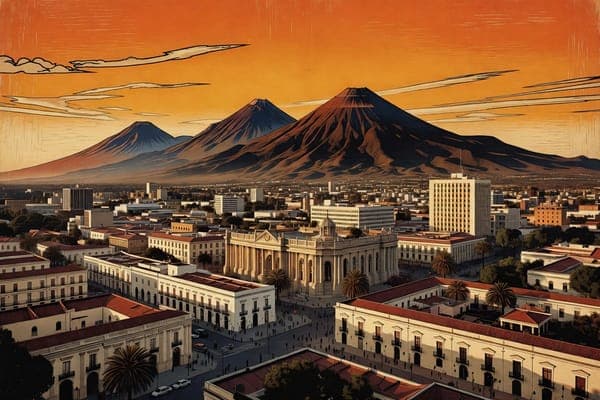
Peru's White City of sillar stone at 2,335 m below volcanoes El Misti, Chachani and Pichu Pichu. UNESCO colonial centre, Santa Catalina Monastery and gateway to Colca Canyon.
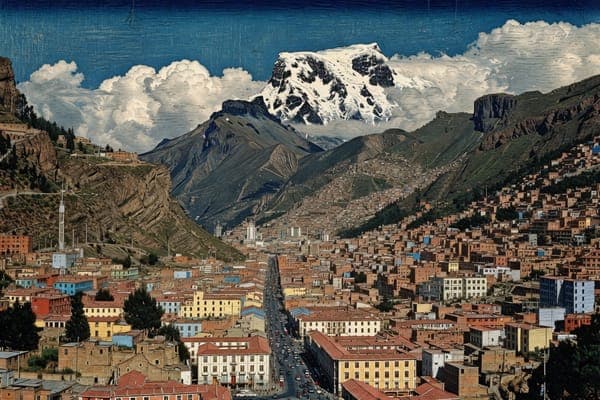
Bolivia's seat of government and highest capital at 3,650-4,150 m - Mi Teleférico cable cars, Witches' Market rituals, cholita wrestling, gateway to Lake Titicaca and Salar de Uyuni.
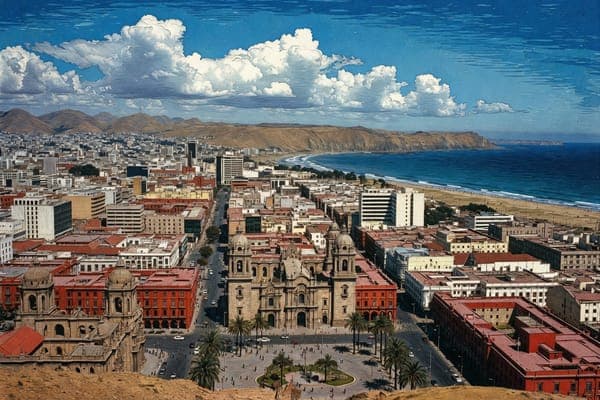
Peru's capital on the Pacific desert coast - 11 million people, colonial UNESCO core, Larco Museum, and the restaurants that lead the World's 50 Best.
Bolivia's 10582 sq km salt flat at 3650 m on the Altiplano. Wet season mirror reflections November to March, flamingo lakes in Eduardo Avaroa Reserve, giant cacti islands, and standard 3 day 4x4 tours from Uyuni town.
Bolivia's constitutional capital at 2,810 m on the Altiplano. UNESCO World Heritage colonial centre, site of the 1825 independence declaration, dinosaur tracks and Tarabuco market.
What's special this year?
Inti Raymi on 24 June 2026 brings thousands to Sacsayhuaman for the sun festival re-enactment with music, dance and Inca costumes. Also the expanded visitor facilities at Qorikancha open in March 2026 with improved lighting on the Inca walls.
What's the catch?
Before you go
- Season: May-Sep
- Budget: $$ ($100-250/day per person)
- Visa: 90 days visa-free for most nationalities
- Currency: Peruvian Sol, US dollars widely accepted
- Language: Spanish, Quechua in markets
- Power: Type A and C, 220V
- Tipping: 10 percent in restaurants
- Altitude: Acclimatise for 24 hours minimum
- Water: Drink bottled or purified
- Transport: Taxis metered or agree price first